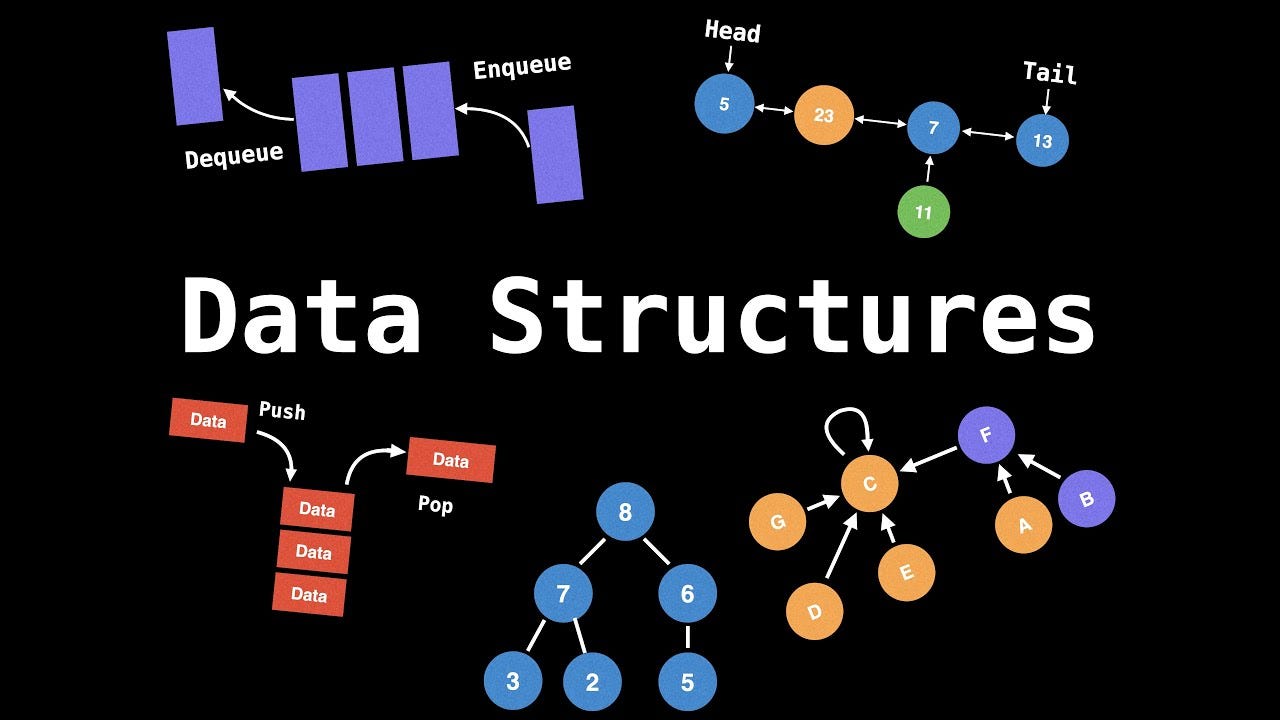
Linked List Operations | Data Structures and Algorithms Day #4
Learn all about linked list operations, including insertion, deletion, traversal, and search, with examples in Python and JavaScript

Software Engineer & Technical Writer
Introduction
In the world of programming, linked lists are fundamental data structures used to organize and store data dynamically. Understanding linked list operations—such as insertion, deletion, traversal, and search—is crucial for mastering algorithms and efficient data manipulation. Linked lists offer flexibility in memory management, making them preferable to arrays in certain scenarios. This article breaks down key linked list operations, complete with Python and JavaScript examples, along with an analysis of their time complexities.
What Are Linked List Operations?
Operations on linked lists allow us to manipulate nodes (elements) and modify the data structure efficiently. Mastery of these operations enables developers to build robust solutions involving stacks, queues, and even complex graph algorithms.
Types of Linked List Operations
1. Insertion in a Linked List
Inserting a new node can happen at the beginning, end, or a specific position in the list.
Python Example:
class Node:
    def __init__(self, data):
        self.data = data
        self.next = None

class LinkedList:
    def __init__(self):
        self.head = None

    # Insert at the beginning
    def insert_at_beginning(self, data):
        new_node = Node(data)
        new_node.next = self.head
        self.head = new_node
JavaScript Example:
class Node {
  constructor(data) {
    this.data = data;
    this.next = null;
  }
}

class LinkedList {
  constructor() {
    this.head = null;
  }

  // Insert at the beginning
  insertAtBeginning(data) {
    const newNode = new Node(data);
    newNode.next = this.head;
    this.head = newNode;
  }
}
Time Complexity of Insertion:
At the Beginning: O(1)
At the End: O(n)
At a Specific Position: O(n)
2. Deletion from a Linked List
We can delete a node from the beginning, end, or specific position in the linked list.
Python Example:
def delete_from_beginning(self):
    if self.head is None:
        return
    self.head = self.head.next
JavaScript Example:
deleteFromBeginning() {
  if (this.head !== null) {
    this.head = this.head.next;
  }
}
Time Complexity of Deletion:
At the Beginning: O(1)
At the End: O(n)
At a Specific Position: O(n)
3. Traversal of a Linked List
Traversal involves visiting each node in the list from the head to the end.
Python Example:
def traverse(self):
    current = self.head
    while current:
        print(current.data, end=" -> ")
        current = current.next
JavaScript Example:
traverse() {
  let current = this.head;
  while (current) {
    console.log(current.data + " -> ");
    current = current.next;
  }
}
Time Complexity of Traversal:
- O(n) for a list with
nnodes.
4. Search in a Linked List
Searching involves checking if a specific value exists in the list.
Python Example:
def search(self, value):
    current = self.head
    while current:
        if current.data == value:
            return True
        current = current.next
    return False
JavaScript Example:
search(value) {
  let current = this.head;
  while (current) {
    if (current.data === value) return true;
    current = current.next;
  }
  return false;
}
Time Complexity of Search:
- O(n)
Comparison of Singly vs. Doubly Linked List Operations
| Operation | Singly Linked List | Doubly Linked List |
| Insertion at Head | O(1) | O(1) |
| Insertion at Tail | O(n) | O(1) |
| Deletion at Head | O(1) | O(1) |
| Deletion at Tail | O(n) | O(1) |
| Search | O(n) | O(n) |
Common Misconceptions About Linked List Operations
"Linked list insertion is always fast."
- While insertion at the head is fast (O(1)), inserting at the tail of a singly linked list takes O(n) time.
"Doubly linked lists are always better."
- While doubly linked lists offer more flexibility, they require more memory due to the extra pointer.
Internal Links for Further Reading
FAQs About Linked List Operations
How to insert a node in a linked list?
To insert a node, create a new node and adjust the pointers to maintain the structure. Refer to the examples above for Python and JavaScript implementations.
What is the time complexity of linked list traversal?
The time complexity for traversing a linked list is O(n), where n is the number of nodes.
Which is better: linked lists or arrays?
Arrays offer faster access with O(1) indexing, but linked lists excel in dynamic memory management, making them ideal for certain algorithms and data storage needs.
Conclusion
Mastering linked list operations—such as insertion, deletion, traversal, and search—is key to solving more complex data structure problems. Now that you understand the basic operations, try implementing them in your own code. Experiment with both singly and doubly linked lists to see which one suits your needs better.
If you have any questions or challenges, feel free to drop a comment below or explore our related articles for more insights!