Introduction to Queue Data Structure and Queue Operations | Data Structures and Algorithms Day #8
Learn about the queue data structure and its operations with Python and JavaScript examples

Software Engineer & Technical Writer
A queue data structure is one of the most fundamental and widely used concepts in computer science. Following the FIFO (First-In-First-Out) principle, queues play a crucial role in programming, helping us efficiently manage ordered collections where elements are processed in the order they arrive. In this article, we’ll explore what queues are, their operations, variations, and practical implementations using Python and JavaScript.
What is a Queue Data Structure?
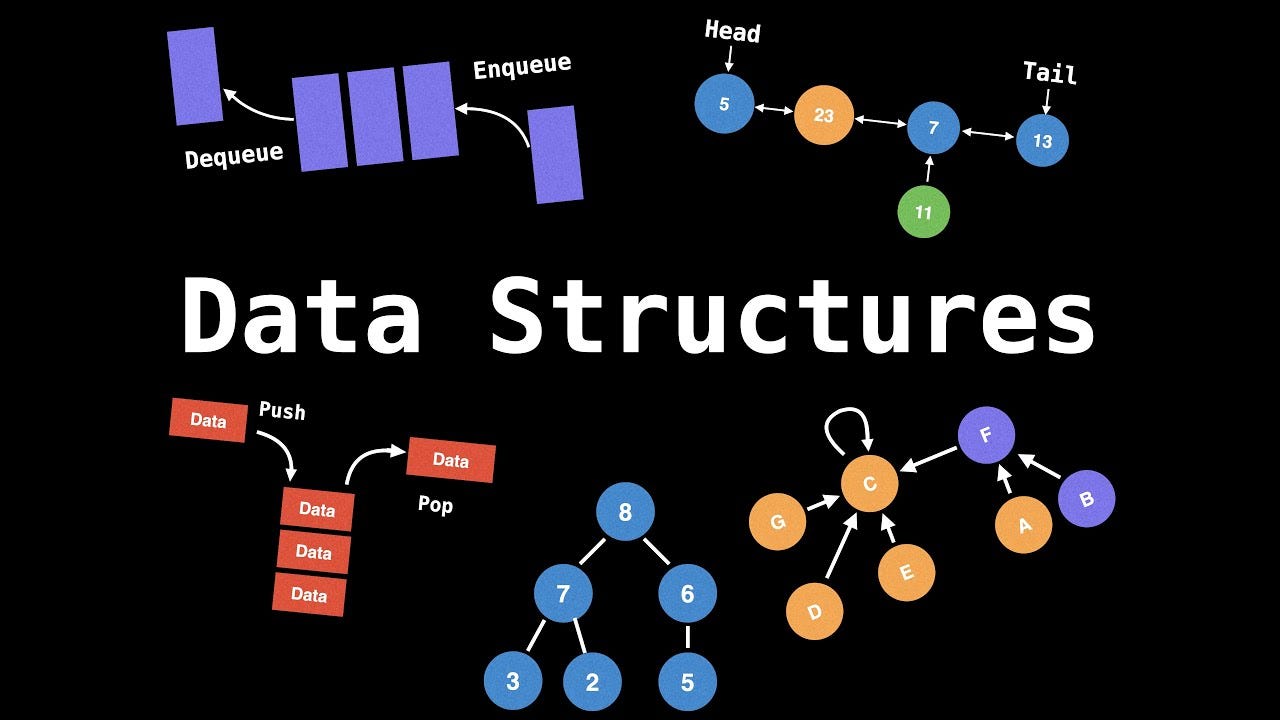
A queue is a linear data structure where elements are inserted at one end (rear) and removed from the other (front). Unlike stacks, which follow LIFO (Last-In-First-Out), a queue follows FIFO (First-In-First-Out), meaning the first element added will be the first to be removed.
Queues are widely used in applications where order matters, such as scheduling, resource management, or data streaming.
FIFO Principle in Queues
The FIFO principle ensures that the first element inserted into the queue will be the first to leave. Think of a queue at a bank or supermarket checkout, where customers are served in the same order they arrive.
Basic Queue Operations
The most common operations on a queue include:
Enqueue Operation
Adding an element to the rear of the queue.Dequeue Operation
Removing an element from the front of the queue.Peek Operation
Checking the element at the front without removing it.isEmpty Operation
Checking whether the queue is empty.
Python and JavaScript Code Examples
1. Queue Implementation in Python
class Queue:
    def __init__(self):
        self.queue = []

    def enqueue(self, item):
        self.queue.append(item)

    def dequeue(self):
        if not self.is_empty():
            return self.queue.pop(0)
        return "Queue is empty"

    def peek(self):
        if not self.is_empty():
            return self.queue[0]
        return "Queue is empty"

    def is_empty(self):
        return len(self.queue) == 0

# Example Usage
q = Queue()
q.enqueue(1)
q.enqueue(2)
print(q.dequeue())  # Output: 1
print(q.peek())     # Output: 2
2. Queue Implementation in JavaScript
class Queue {
  constructor() {
    this.items = [];
  }

  enqueue(element) {
    this.items.push(element);
  }

  dequeue() {
    if (this.isEmpty()) {
      return "Queue is empty";
    }
    return this.items.shift();
  }

  peek() {
    return this.isEmpty() ? "Queue is empty" : this.items[0];
  }

  isEmpty() {
    return this.items.length === 0;
  }
}

// Example Usage
const q = new Queue();
q.enqueue(1);
q.enqueue(2);
console.log(q.dequeue());  // Output: 1
console.log(q.peek());     // Output: 2
Time Complexity of Queue Operations
| Operation | Time Complexity |
| Enqueue | O(1) |
| Dequeue | O(1) |
| Peek | O(1) |
| isEmpty | O(1) |
Types of Queues
1. Simple Queue
A basic queue that follows the FIFO principle.
2. Circular Queue
In a circular queue, the rear connects back to the front, forming a loop to reuse empty spaces.
3. Double-Ended Queue (Deque)
Allows insertion and removal from both the front and rear.
4. Priority Queue
Each element in a priority queue is assigned a priority, and elements with higher priority are dequeued before lower-priority elements.
Applications of Queues
CPU Scheduling: Queues help manage task scheduling in operating systems.
Printers: Print jobs are queued for orderly processing.
Breadth-First Search (BFS): BFS traversal in graphs relies on queues.
Resource Management: Web servers handle incoming requests in a queue.
Common Misconceptions About Queues
"Queues are only used in networking."
While queues are essential in networking, they are also used in task scheduling, graph traversal, and simulation systems."Queues are less efficient than stacks."
The efficiency of a queue depends on the use case. For example, a queue is more suitable for tasks requiring order maintenance, while a stack is better for backtracking.
FAQ
1. How does a circular queue work?
A circular queue reuses empty spaces by linking the rear of the queue back to the front, forming a loop. This allows continuous usage of the allocated space without expanding the size of the queue.
2. What is the difference between a queue and a stack?
A stack follows the LIFO principle (Last-In-First-Out), while a queue follows the FIFO principle (First-In-First-Out). Queues are ideal for tasks requiring ordered processing, while stacks are used for backtracking or recursion.
3. How do I implement a priority queue?
A priority queue assigns each element a priority, and elements are dequeued based on their priority. You can use a heap data structure to efficiently implement a priority queue.
Conclusion
In this article, we covered the basics of queue data structures and their operations, including enqueue, dequeue, peek, and isEmpty. We explored different types of queues, such as circular queues and priority queues, and provided Python and JavaScript code examples to help you implement queues in your projects.
Queues are essential in many real-world applications, from CPU scheduling to graph traversal algorithms, making them an important concept to master.
Now that you understand the queue data structure and its operations, try implementing your own queue from scratch using the provided examples. Practice with different variations like priority queues and circular queues to solidify your knowledge!